· Updated · Lina Chen · Guides · 6 min read
Chrome Plating for Custom Car Emblems: What Buyers Should Ask
Bright vs satin chrome, paint fill, plastic vs metal bases, and the questions that keep plated badges from failing outdoors.
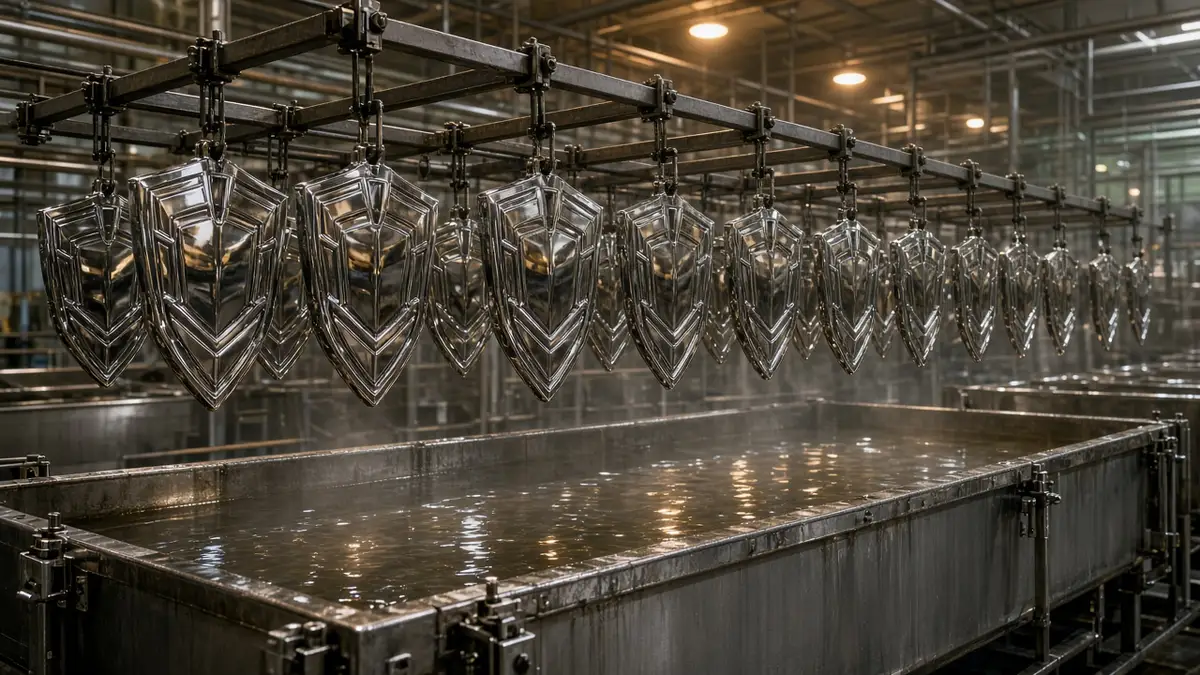
Chrome is the finish most importers ask for first. It is also the finish most often under-specified. A low quote that skips base metal, clear coat, or paint fill will not match the sample you approved in the office — and it will not survive the same environment on the vehicle.
This guide explains what “chrome” means on a badge RFQ, how metal and plastic bases differ, and which questions keep plated emblems from failing in rain, UV, and handling.
Key takeaways
- Chrome car emblems are plated on either die-cast metal (zinc) or ABS plastic; both look similar in photos but age differently outdoors.
- Decorative chrome is a multi-layer stack (nickel, sometimes copper, then chromium) on a prepared base.
- Specify exterior or interior use, bright or satin finish, paint-fill colors (Pantone), and whether a clear coat is included.
- Tie bulk approval to a retained sample so color does not drift between the first and second PO.
Metal chrome vs plastic chrome: what is the difference?
| Base | Typical use | Watch for |
|---|---|---|
| Zinc or similar die-cast metal | Grille and hood badges, crisp 3D edges | Weight, studs, outdoor sealing |
| ABS with decorative plating | Higher volume, lighter badges | Adhesion, UV, tape bond |
Both can look “chrome” in a photo. They do not age the same way. Say which you want in the RFQ, or ask us to recommend one after we see the artwork. Process overview: car emblem manufacturing process. Product page: chrome badges.
Metal badges usually feel heavier and hold sharp lettering. Plastic chrome can be the right choice for large flat marks or programs where weight matters, but the supplier must control adhesion promoters and top coats — not only mirror appearance on day one.
What happens in the plating shop (in plain language)
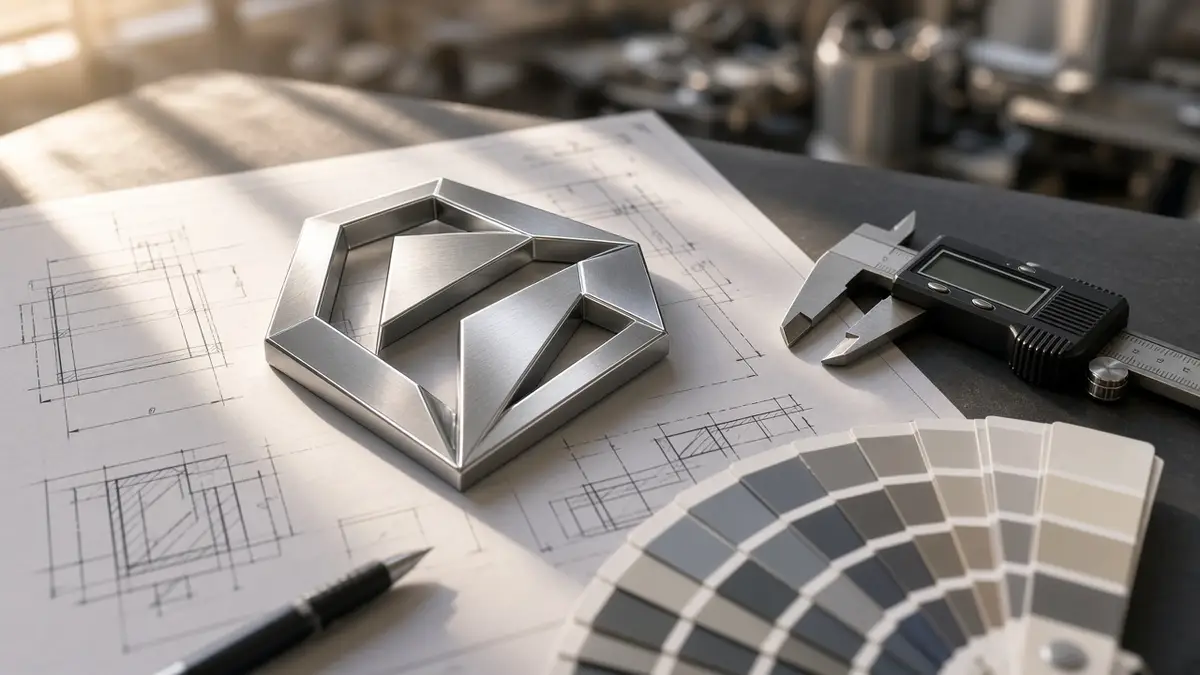
Decorative chrome on emblems is typically a multi-layer stack on a prepared base: cleaning, activation, nickel (and sometimes copper) for leveling, then a thin chromium layer for reflectivity. Paint-filled areas are masked or applied after plating steps depending on the design.
You do not need to specify bath chemistry in your RFQ, but you do need to specify:
- Whether the part is exterior or interior.
- The reference look (bright mirror vs softer satin).
- Whether recessed areas need enamel or paint fill with a named color standard.
If a factory cannot describe their stack at a high level, treat the quote as incomplete.
Bright, satin, and paint fill
- Bright chrome reads luxury and shows every scratch in handling.
- Satin / brushed hides fingerprints and suits modern grilles.
- Paint fill (enamel or similar in recessed areas) needs a Pantone or a physical chip. “Black” is not a spec.
Ask whether a protective clear coat is included and whether the sample uses the same bath and paint as bulk. Some suppliers plate samples in a development line and move bulk to a busier line without telling the buyer — that is when color drifts between PO1 and PO2.
For OEM-style programs, tie approval to a retained sample or a signed color panel stored at the factory. See MOQ and sampling for how we sequence mockup, sample, and bulk.
Outdoor durability and realistic expectations
No decorative chrome badge is “maintenance-free” on a grille that sees road salt, pressure washers, and summer heat. What you can buy is a repeatable process that meets the use case you describe.
Tell the factory:
- Country or climate band (coastal salt, desert UV, cold cycles).
- Whether the badge sits in the direct airflow or behind mesh.
- Expected product life (3-year accessory vs 10-year brand mark).
We will not promise showroom gloss forever without knowing the environment. We will quote a finish we can repeat, and we will flag artwork that cannot hold paint in fine lines. If your mark has hairline serifs, engineering may suggest widening strokes before tooling — that conversation is cheaper at mockup stage than at bulk QC.
Common defects buyers should know
| Defect | Often caused by |
|---|---|
| Cloudy or yellow chrome | Contaminated bath, wrong prep, or excessive clear coat |
| Paint bleed on edges | Masking tolerance on 3D curves |
| Tape failure on plastic chrome | Low surface energy, wrong adhesive, or no primer |
| Color shift on reorder | Different line, worn tooling, or unstored master sample |
When you inspect a pre-production sample, check edges, stud roots, and paint boundaries under normal light — not only the center of the face. Compare against vector artwork rules you sent.
Questions worth sending with the logo
- Is the badge exterior (rain, car wash, UV) or interior?
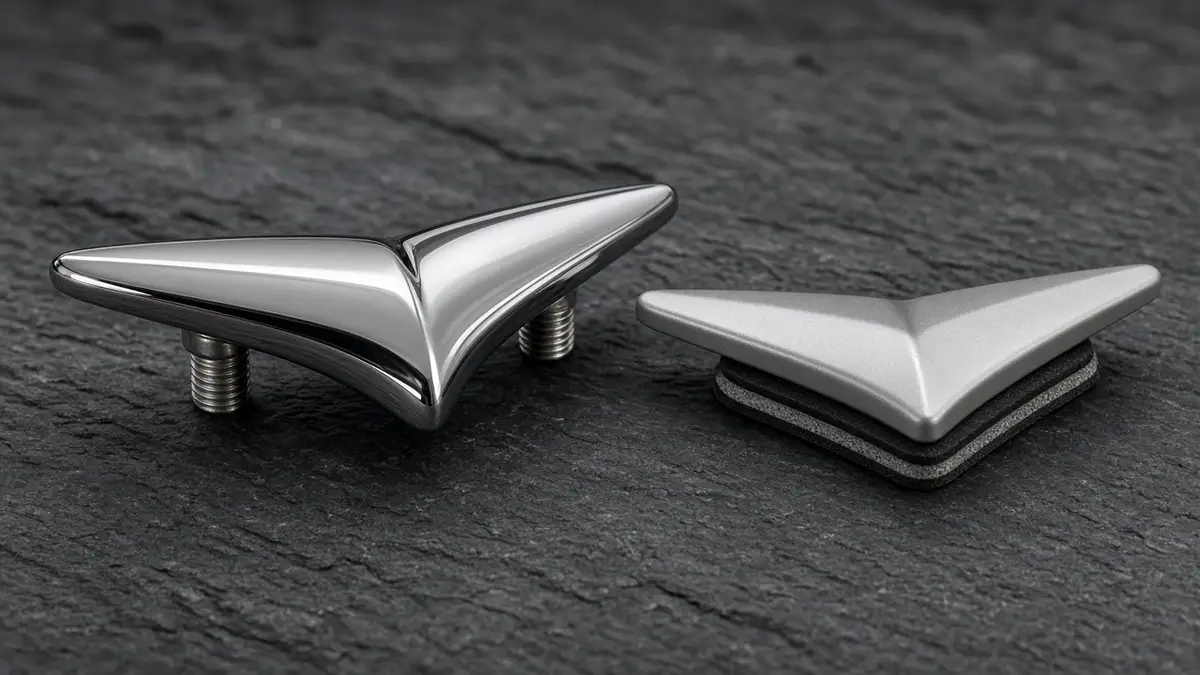
- Mounting: studs, 3M-style tape, or mechanical clips?
- Do you need a pre-production sample before tooling is locked?
- What is the reorder plan — same SKU in 6 months?
- Will the badge be handled in assembly gloves only, or in open retail packaging?
Sampling timing is covered in MOQ and sampling. If you are unsure whether your program is OEM or catalog aftermarket, read OEM vs aftermarket badges before you lock thickness and mounting.
Cost drivers (so quotes are comparable)
Chrome emblem pricing moves with:
- Base material (zinc die-cast vs ABS vs aluminum).
- 3D depth and undercuts (tooling complexity).
- Paint areas and number of color passes.
- Plating grade and any extra clear or protective layer for exterior use.
- Quantity and whether tooling is amortized across the first PO only.
Two quotes that differ by thirty percent are often quoting different bases or skipping sample retention — not “the same badge cheaper.” Align Incoterms and packing when you compare; see how to choose a supplier for a full RFQ checklist.
Illuminated and hybrid finishes
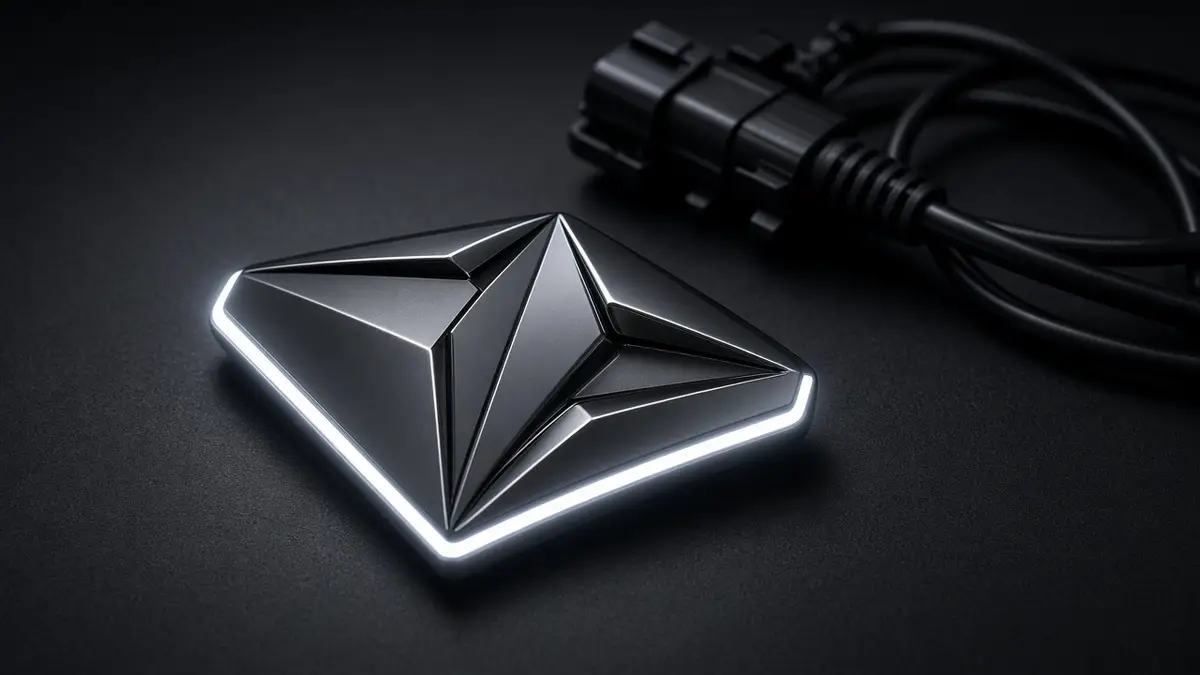
Lighted grille marks combine plating, lenses, and sealing. A chrome ring around an LED module still needs the same adhesion discipline as a solid badge, plus gasket and wiring specs. If your program includes illumination, start at illuminated emblems and send power, connector, and sealing requirements with the artwork — a visual mockup alone is not a wiring spec.
What we will not promise
We will not promise “show-chrome forever” without knowing the environment. We will not plate unauthorized copies of third-party automotive brands. We manufacture to your licensed marks.
Approval checklist before bulk
Use this before you release deposit on mass production:
- Signed mockup PDF with dimensions.
- Physical sample approved for finish, paint, and mounting.
- Written confirmation that bulk uses the same material and plating line as the sample.
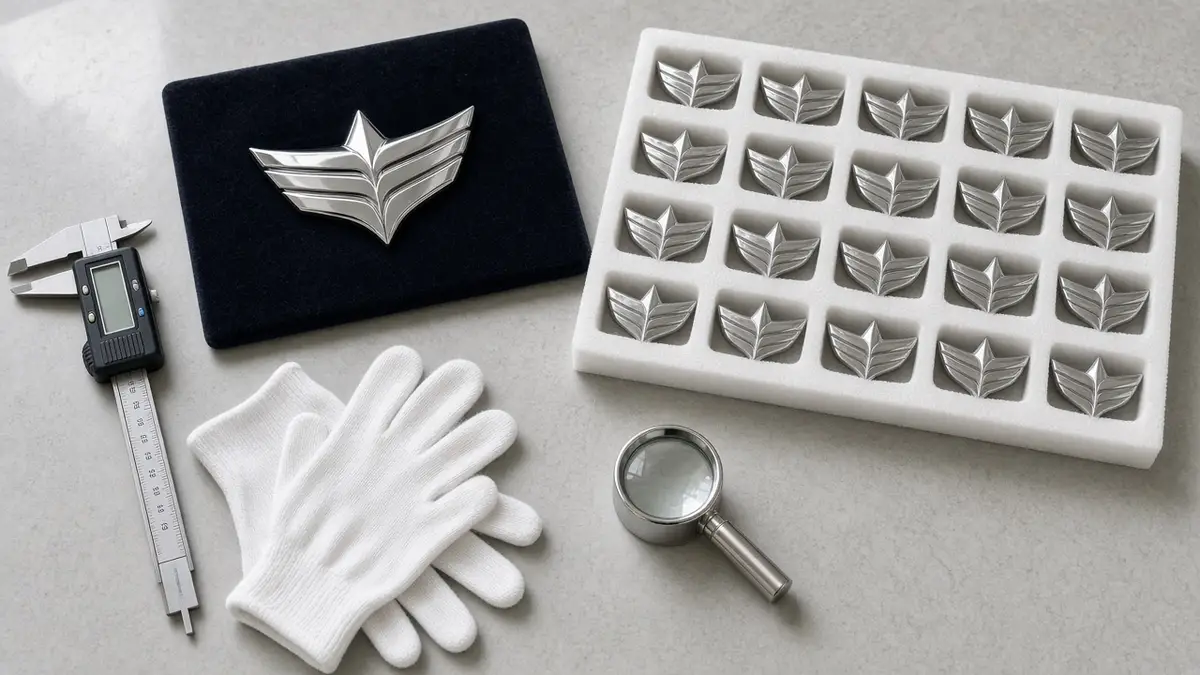
- Carton and inner pack agreed for export (foam, bubble, or tray).
- Reorder SKU code and reference sample location noted on the PO.
Request a quote with finish photos if you have a reference badge. A photo plus vector art is faster than a paragraph of adjectives. Our team replies with MOQ, lead time, and any artwork changes needed before the free mockup.
Next step
MOQ from 100 pcs · free mockup in about 24 hours
Send licensed artwork, quantity, and destination for a factory reply.
Request a Quote- chrome
- process